Headache Myths – Part 3

If you get headaches, you’ve probably heard plenty of well-meaning advice – but not all of it holds up in real life. In this blog series, we regularly take a closer look at common headache myths and see what the science has to say. Here’s part three of our series.

Myth No. 7: Certain foods can trigger migraine attacks

– Not proven.

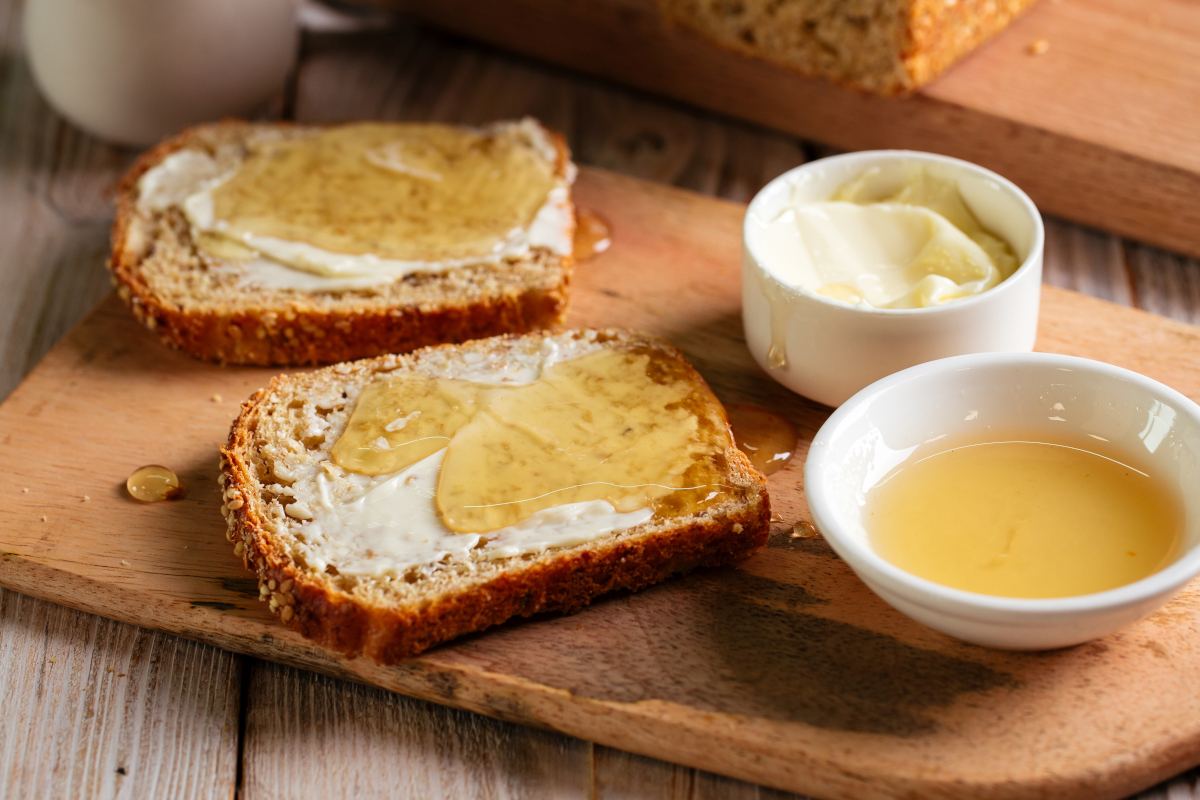
Foods like chocolate, cheese, or nuts are often blamed for triggering migraines.

However, there is very little solid scientific evidence to support this idea. Many people say they crave – and eat – chocolate shortly before a migraine attack. The chocolate itself is probably not the real trigger, though. Instead, the craving for something sweet is more likely to be an early sign that the migraine attack has already started. According to headache specialist Hartmut Göbel from the Kiel Pain Clinic, migraine attacks develop when the brain is running low on energy (read more about it in this article)

When a migraine attack is on the way, the brain activates a protective mechanism: it triggers strong cravings in an attempt to fix the energy shortage. Chocolate is one of the most common cravings, which is why it developed a reputation as a typical migraine trigger. Prof. Göbel compares it to cravings during pregnancy: craving pickled herring does not cause pregnancy – it is simply a sign of it. In the same way, craving chocolate is not the cause of migraine, but part of the condition itself.

Based on what researchers now know about the period before a migraine attack, this explanation makes a lot of sense. Although migraine research has made huge progress, many of the biological processes involved are still not fully understood. Studying the exact role of nutrition in migraine is particularly challenging (read more about it in this article).

In fact, several studies have failed to show that specific foods directly trigger migraine attacks. And yet, many people with migraine are convinced that certain foods or drinks are personal triggers. This is a perfect example of what makes scientific proof so difficult: we are all different. Our physical and mental state also changes all the time. This makes it almost impossible to study groups of people under exactly the same conditions and to evaluate the results using strict scientific standards. For example, on one day we may tolerate a glass of sparkling wine without any problems, while on another occasion the same drink may leave us with a headache. This changeability makes it extremely difficult to make hard and fast rules about food and headaches.

People living with headaches should therefore be careful when others make claims about supposedly “sure-fire” triggers. These perceived connections can be misleading, and – if they exist at all – are very individual. It’s important not to generalise such experiences. Believing in triggers that may not actually exist can become a major burden if people begin organising their daily lives around avoiding them. The stress that comes with trying to maintain a “perfect” trigger-free lifestyle is unlikely to help migraine prevention.

Based on current research and extensive clinical experience, the most reliable nutritional approach for migraine is avoiding energy deficits in the brain – for example, by eating regular meals, maintaining stable routines, and staying well hydrated.

Myth No. 8: Mixing different types of alcohol makes your hangover headache worse

– Not true (and there’s a study to prove it).

Alcohol is one of the classic headache triggers. A common belief is that you can avoid a hangover by sticking to one type of alcohol and by not drinking beer before wine (or vice versa). Researchers at Witten/Herdecke University looked at whether the order in which a person consumes alcoholic drinks affects the severity of a hangover. To study this, 90 adults – split into three groups – took part in controlled drinking sessions on two separate occasions.

One group drank beer until they reached a blood alcohol level of 0.5‰, then switched to white wine until their alcohol level exceeded 1.1‰. On another test day, they drank the beverages in the opposite order.

A second group started with wine and then switched to beer, also reversing the order during the second session. A third group stayed with the same drink – either beer or wine. On the second test day, they were given the other beverage.

After reaching the target alcohol level, participants were sent to bed with water and asked about their hangover symptoms the next morning using the scientifically recognised “Acute Hangover Scale” (AHS). The result: hangover severity was very similar in all groups. It made no meaningful difference whether participants drank beer before wine or wine before beer. In short: everyone felt similarly awful. The researchers concluded that how drunk people felt and whether they vomited were the best predictors of the next morning’s hangover – not the order in which they had their alcoholic drinks. So, how bad your hangover is doesn’t depend on which drink you had first the night before – it depends on how much you had to drink and how drunk you got.

But what actually causes alcohol-related headaches, if not the order in which you have your alcoholic drinks? Experts believe several factors are involved. One important factor is alcohol’s diuretic effect, which can lead to dehydration. For the brain, dehydration creates a real energy supply problem and significantly increases the likelihood of headaches.

Myth No. 9: Bed rest is always best

– Actually, not always.

Mythos 9: Bei Kopfschmerzen ist Bettruhe immer das Beste

Some people believe that the best remedy for any headache is staying in bed. In fact, it depends very much on the type of headache.

During a migraine attack, rest and darkness can help ease symptoms. For many patients, strict bed rest is the only way to cope with severe pain and sensitivity to light, noise, or smells. On a general level, good, restorative sleep is also very important for migraine prevention. The situation is different with tension-type headache, the most common form of headache. Stress and a lack of physical activity often play a role in its development. In these cases, light exercise and fresh air are usually the better option. When a tension headache is just starting, going for a little walk outside can be enough to stop the attack. If the headache is already there, movement often helps to reduce the pain quickly.

Regular exercise is also highly effective in preventing tension-type headaches. Physical activity reduces stress, relieves muscular tension, and keeps the body active – all of which can help prevent headache attacks. This also applies to migraine. However, people with migraine should avoid overexertion. It is much better to exercise two or three times a week at a comfortable level and build up gradually than to start by running a half-marathon.

  • References
    • Arca KN, Halker Singh RB. Dehydration and Headache. Curr Pain Headache Rep. 2021 Jul 15;25(8):56. doi: 10.1007/s11916-021-00966-z.
    • Błaszczyk B, Straburzyński M, Więckiewicz M, Budrewicz S, Niemiec P, Staszkiewicz M, Waliszewska-Prosół M. Relationship between alcohol and primary headaches: a systematic review and meta-analysis. J Headache Pain. 2023 Aug 23;24(1):116. doi: 10.1186/s10194-023-01653-7. PMID: 37612595; PMCID: PMC10463699.
    • Blau JN. Water deprivation: a new migraine precipitant. Headache. 2005 Jun;45(6):757-9. doi: 10.1111/j.1526-4610.2005.05143_3.x.
    • Casanova A, Vives-Mestres M, Donoghue S, Mian A, Wöber C. The role of avoiding known triggers, embracing protectors, and adhering to healthy lifestyle recommendations in migraine prophylaxis: Insights from a prospective cohort of 1125 people with episodic migraine. Headache. 2023 Jan;63(1):51-61. doi: 10.1111/head.14451. Epub 2023 Jan 18. PMID: 36651502.
    • Göbel, H. (2025): Migräne. Diagnostik – Therapie – Prävention. 2nd edition, Berlin/Heidelberg. Springer-Verlag.
    • Göbel, H. (2025): Erfolgreich gegen Kopfschmerzen und Migräne. 10th edition, Berlin/Heidelberg. Springer-Verlag.
    • Khorsha F, Mirzababaei A, Togha M, Mirzaei K. Association of drinking water and migraine headache severity. J Clin Neurosci. 2020 Jul;77:81-84. doi: 10.1016/j.jocn.2020.05.034. Epub 2020 May 20.
    • Köchling J, Geis B, Wirth S, Hensel KO. Grape or grain but never the twain? A randomized controlled multiarm matched-triplet crossover trial of beer and wine. Am J Clin Nutr. 2019 Feb 1;109(2):345-352. doi: 10.1093/ajcn/nqy309. PMID: 30753321; PMCID: PMC6410559.
    • Lexikon der Neurowissenschaft: Gehirnstoffwechsel. www.spektrum.de/lexikon/neurowissenschaft/gehirnstoffwechsel/4122; Spektrum Akademischer Verlag, Heidelberg, 2000.
    • Magistretti P et al. A Cellular Perspective on Brain Energy Metabolism and Functional Imaging. Review; Neuron 2015; 86: 883 – 901. doi.org/10.1016/j.neuron.2015.03.035
    • Peris F, Donoghue S, Torres F, Mian A, Wöber C. Towards improved migraine management: Determining potential trigger factors in individual patients. Cephalalgia. 2017 Apr;37(5):452-463. doi: 10.1177/0333102416649761. Epub 2016 May 14. PMID: 27179352.
    • Wöber C, Wöber-Bingöl C. Triggers of migraine and tension-type headache. Handb Clin Neurol. 2010;97:161-72. doi: 10.1016/S0072-9752(10)97012-7. PMID: 20816418.